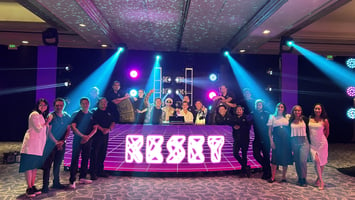
On May 29, 2026, Mills James Mexico celebrated its fifth anniversary the way it knows best: by...
What’s Changing in B2B Video: A Conversation With Storydoc
Video has always been a powerful way for B2B brands to connect with their audiences. Time and again, video outperforms static content when it comes to engagement, persuasion, knowledge retention, and authenticity, and these stats apply equally to B2B brands as to consumer products. (or however you write that)
But this power has always come with a catch, especially for B2B brands: Video takes more time, costs more money, and can be difficult to scale.
That’s where things are changing. In August, Mills James Creative Director Mike Yearling sat down with Storydoc CEO Itai Amoza to explore exactly how brands are transforming B2B brand engagement at ROIs that make their CFOs happy. Amoza brought insights into how buyers engage with B2B content, while Yearling shared his perspective from the production side, including how evolving workflows and AI are giving brands more ways to create, repurpose, and extend the value of their video content without sacrificing quality or brand standards.
Want to hear the full conversation? [Watch the full webinar here.]
We’ve pulled together a few highlights below, but the full conversation goes deeper into content strategy, buyer engagement, AI, and the evolving production landscape.
How to Get More Value From Every Shoot
A single video shoot can create much more than one finished video. Yearling discusses how thinking about content as a larger ecosystem can help brands get more value from the time and resources invested in production.
How Video Can Hook Buyers
You don't always have to wait until the end of a sales presentation to introduce video. Yearling shares how Mills James has experimented with using video at the beginning of a Storydoc presentation to capture attention and give potential clients a quick sense of who they're working with.
The Biggest Mistake Brands Make With Video
There isn't one formula for effective video. Yearling explains why brands should start with what makes their own story unique rather than simply trying to recreate what works for someone else.
How Social Media Is Changing Video Production
Short-form platforms have changed audience expectations, but not every video needs to be produced like a commercial. Yearling talks about choosing the right level of production for the audience, message, and platform.
How AI Is Changing Video Production
AI is becoming another tool in the creative process, from brainstorming and pre-production to developing new creative ideas. Yearling shares how Mills James is using AI to expand what creative teams can explore while keeping human direction at the center.
How to Personalize Your Story for Every Buyer
A strong sales story starts with listening. Yearling walks through how information gathered during discovery can shape a more personalized pitch, from the examples included to the concepts presented.
Video vs. Static Content on Social Media
Video continues to outperform static content across many social platforms. Yearling and Amoza discuss what that means for brands and how the same principles that capture attention on social media can also apply to sales presentations.
Should You Shoot Brand Content on Your Phone?
Not every piece of content needs a full production. Yearling discusses when a phone can be enough, where production quality still matters, and why good audio can make a bigger difference than you might expect.
Video Is Changing. The Opportunity Is Growing.
The way brands approach video is changing, but the fundamentals remain the same: understand your audience, start with a clear story, and create content that gives people a reason to keep watching.
What’s changing is what’s possible. New production workflows and AI-assisted tools are giving creative teams more ways to explore ideas, create content, and make the most of every production. For brands, that means video can become a more flexible and scalable part of the marketing mix without losing the creative thinking and human perspective that make it effective.
The opportunity isn't simply to make more video. It's to make video more intentionally, with a clearer understanding of who it's for, what it needs to accomplish, and how it can continue working long after the initial production.
Want to hear the full conversation? [Watch the webinar here.]